-
Study
-
Quick Links
- Open Days & Events
- Real-World Learning
- Unlock Your Potential
- Tuition Fees, Funding & Scholarships
- Real World Learning
-
Undergraduate
- Application Guides
- UCAS Exhibitions
- Extended Degrees
- School & College Outreach
- Information for Parents
-
Postgraduate
- Application Guide
- Postgraduate Research Degrees
- Flexible Learning
- Change Direction
- Register your Interest
-
Student Life
- Students' Union
- The Hub - Student Blog
- Accommodation
- Northumbria Sport
- Support for Students
-
Learning Experience
- Real-World Learning
- Research-enriched learning
- Graduate Futures
- The Business Clinic
- Study Abroad
-
-
International
International
Northumbria’s global footprint touches every continent across the world, through our global partnerships across 17 institutions in 10 countries, to our 277,000 strong alumni community and 150 recruitment partners – we prepare our students for the challenges of tomorrow. Discover more about how to join Northumbria’s global family or our partnerships.
View our Global Footprint-
Quick Links
- Course Search
- Undergraduate Study
- Postgraduate Study
- Information for Parents
- London Campus
- Northumbria Pathway
- Cost of Living
- Sign up for Information
-
International Students
- Information for International Students
- Northumbria and your Country
- International Events
- Application Guide
- Entry Requirements and Education Country Agents
- Global Offices
- English Requirements
- English Language Centre
- International student support
- Cost of Living
-
International Fees and Funding
- International Undergraduate Fees
- International Undergraduate Funding
- International Masters Fees
- International Masters Funding
- International Postgraduate Research Fees
- International Postgraduate Research Funding
- Useful Financial Information
-
International Partners
- Agent and Representatives Network
- Global Partnerships
- Global Community
-
International Mobility
- Study Abroad
- Information for Incoming Exchange Students
-
-
Business
Business
The world is changing faster than ever before. The future is there to be won by organisations who find ways to turn today's possibilities into tomorrows competitive edge. In a connected world, collaboration can be the key to success.
More on our Business Services-
Business Quick Links
- Contact Us
- Business Events
- Research and Consultancy
- Education and Training
- Workforce Development Courses
- Join our mailing list
-
Education and Training
- Higher and Degree Apprenticeships
- Continuing Professional Development
- Apprenticeship Fees & Funding
- Apprenticeship FAQs
- How to Develop an Apprentice
- Apprenticeship Vacancies
- Enquire Now
-
Research and Consultancy
- Space
- Energy
- AI and Tech
- CHASE: Centre for Health and Social Equity
- NESST
-
-
Research
Research
Northumbria is a research-rich, business-focused, professional university with a global reputation for academic quality. We conduct ground-breaking research that is responsive to the science & technology, health & well being, economic and social and arts & cultural needs for the communities
Discover more about our Research-
Quick Links
- Research Peaks of Excellence
- Academic Departments
- Research Staff
- Postgraduate Research Studentships
- Research Events
-
Research at Northumbria
- Interdisciplinary Research Themes
- Research Impact
- REF
- Partners and Collaborators
-
Support for Researchers
- Research and Innovation Services Staff
- Researcher Development and Training
- Ethics, Integrity, and Trusted Research
- University Library
- Vice Chancellors Fellows
-
Research Degrees
- Postgraduate Research Overview
- Doctoral Training Partnerships and Centres
- Academic Departments
-
Research Culture
- Research Culture
- Research Culture Action Plan
- Concordats and Commitments
-
-
About Us
-
About Northumbria
- Our Strategy
- Our Staff
- Our Schools
- Place and Partnerships
- Leadership & Governance
- University Services
- Northumbria History
- Contact us
- Online Shop
-
-
Alumni
Alumni
Northumbria University is renowned for the calibre of its business-ready graduates. Our alumni network has over 253,000 graduates based in 178 countries worldwide in a range of sectors, our alumni are making a real impact on the world.
Our Alumni - Work For Us
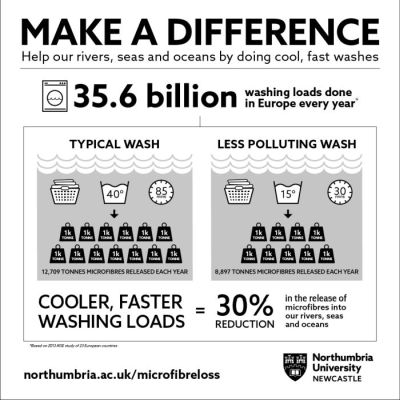
A new study has revealed that almost 13,000 tonnes of microfibres, equivalent to two rubbish trucks every day, are being released into European marine environments every year – but this could be reduced by as much as 30% if we made a small change to our laundry habits.
The findings have been published by the scientific journal PLOS ONE in time for World Oceans Day on Monday 8 June.
Every time you wash your clothes, thousands of tiny microfibres from the fabric are released into rivers, the sea and the ocean, causing marine pollution. Scientists have speculated for some time that these microfibres may cause more harm than microbeads, which were banned from UK and US consumer products in recent years.
Researchers from Northumbria University worked in partnership with Procter & Gamble, makers of Ariel, Tide, Downy and Lenor on the first major forensic study into the environmental impact of microfibres from real soiled household laundry.
Their forensic analysis revealed an average of 114 mg of microfibres were released per kilogram of fabric in each wash load during a standard washing cycle.
Given that a 2013 AISE report suggested 35.6 billion wash loads are completed in 23 European countries each year, the researchers suggest a massive 12,709 tonnes of microfibres are being released from washing machines into rivers, the sea and the ocean each year in Europe alone. This is the equivalent of two rubbish trucks worth of waste ending up in marine environments each day.
However, the researchers achieved a 30% reduction in the amount of microfibres released when they performed a 30-minute 15˚C wash cycle, in comparison to a standard 85-minute 40˚C cycle, based on typical domestic laundering.If households changed to cooler, faster washes, they would potentially save 3,813 tonnes of microfibres being released into marine ecosystems in Europe.
The researchers found even more significant differences when they compared different microfibre release from different types of North American washing machines.
Households in North America and Canada have historically used high volume traditional top loading washing machines with an average 64 litre wash water volume. The market is gradually moving to high-efficiency machines which use up to 50% less water and energy per load.
As a consequence, these high-efficiency machines released less microfibres than traditional top-loading machines, with notable examples including a 70% reduction in microfibres from polyester fleece fabrics and a 37% reduction from polyester T-shirts.
Other key findings emerging from the study include:
• Larger wash loads led to a decrease in the release of microfibres, due to a lower ratio of water to fabric. As such, the research team advises consumers fill – but do not overfill – their washing machines. A correctly filled washing machine should be around three-quarters full.
• New clothes release more microfibres than older clothes. Microfibre release was more prominent in new clothes during the first eight washes.
• Fabric softeners were found to have no direct impact on microfibre release when tested in both European and North American washing conditions.
![]()
A novel aspect of the study was the involvement of forensics expertise from Dr Kelly Sheridan, an expert in forensic textile fibres who has worked on several high-profile murder cases. Her guidance ensured the research could be conducted without cross-contamination of fibres from other sources.
The team applied test methods used in forensic science, such as spectroscopic and microscopy techniques, to examine the structure and composition of the microfibres released from the clothing. This enabled the fibres to be weighed and characterised to determine the ratios of manmade to natural fibres being released from wash loads.
The researchers found that 96% of the fibres released were natural, coming from cotton, wool and viscose, with synthetic fibres, such as nylon, polyester and acrylic accounting for just 4%.
A positive point to note is that the natural fibres from plant and animal sources biodegrade much more rapidly than synthetic fibres. A previous study has identified that cotton fibres degraded by 76% after almost eight months in wastewater, compared to just 4% deterioration in polyester fibres. This means that natural fibres will continue to degrade over time, whereas petroleum-based microfibres plateaued and can be expected to remain in aquatic environments for a much longer period.
John R. Dean, Professor of Analytical and Environmental Sciences at Northumbria University, who led the study, said: “This is the first major study to examine real household wash loads and the reality of fibre release. We were surprised not only by the sheer quantity of fibres coming from these domestic wash loads, but also to see that the composition of microfibres coming out of the washing machine does not match the composition of clothing going into the machine, due to the way fabrics are constructed.
“Finding an ultimate solution to the pollution of marine ecosystems by microfibres released during laundering will likely require significant interventions in both textiles manufacturing processes and washing machine appliance design.”
Dr Neil Lant, Research Fellow at Procter & Gamble, said: “This study has proven that consumer choices in the way they do their laundry can have a significant and immediate impact on microfibre pollution. These won’t eliminate the issue but could achieve a meaningful short-term reduction while other solutions such as washing machine filters and low-shedding clothing are developed and commercialised.”
The researchers say that the study provides evidence for appliance manufacturers to introduce filtering systems into the design of machines and develop approaches to reduce water consumption in laundry. Procter & Gamble laundry products, such as Ariel Pods, are suited to low temperatures and the company intends to use this evidence to bring further innovations to enable consumers to wash with low temperatures without compromising on performance.
They also hope it will encourage textile manufacturers to help by conducting filtered pre-washing to remove the most labile fibres which can easily break down and displace.
The study is a further example of the work undertaken at Northumbria University which led to it being ranked 6th in the UK and 27th globally for sustainability last month. Northumbria is recognised as a global leader for sustainability in Times Higher Education’s Impact rankings for the contribution it makes to the United Nations Sustainable Development Goals. The rankings recognise how universities operate and how their research and partnerships are delivering social, environmental, and economic benefits regionally, nationally and internationally.
The paper, Microfiber Release from Real Soiled Consumer Laundry and Impact of Fabric Care Products and Washing Conditions is now available through PLOS ONE.
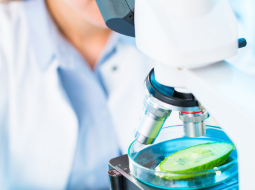
The Department of Applied Sciences has an exciting and extensive portfolio of subjects including biology, biomedical sciences, chemistry, forensic science, food and nutritional sciences.
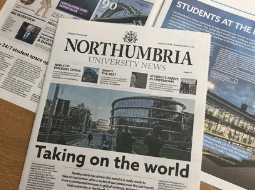
This is the place to find all the latest news releases, feature articles, expert comment, and video and audio clips from Northumbria University
News
- First cohort of Civil Engineering Degree Apprentices graduate from Northumbria
- Venice Biennale Fellowship
- Northumbria expands results day support for students
- Northumbria academic recognised in the British Forces in Business Awards 2025
- £1.2m grant extends research into the benefits of breast milk for premature babies
- Northumbria graduate entrepreneur takes the AI industry by storm
- Study identifies attitudes towards personal data processing for national security
- Lifetime Brands brings student design concept to life
- New study reveals Arabia’s ‘green past’ over the last 8 million years
- How evaluation can reform health and social care services
- Researchers embark on a project to further explore the experiences of children from military families
- Northumbria University's pioneering event series returns with insights on experiential and simulated learning
- Support for doctoral students to explore the experiences of women who have been in prison
- Funding boost to transform breastfeeding education and practice
- A new brand of coffee culture takes hold in the North East
- BBRSC awards £6m of funding for North East Bioscience Doctoral Students
- £3m funding to evaluate health and social care improvements
- Balfour Beatty apprentices graduate from Northumbria University
- Long COVID research team wins global award
- Northumbria researchers lead discussions at NIHR event on multiple and complex needs
- Healthcare training facility opens to support delivery of new T-level course
- Young people praise Northumbria University for delivery of HAF Plus pilot
- Nursing academics co-produce new play with Alphabetti Theatre
- Research project to explore the experiences of young people from military families
- Academy of Social Sciences welcomes two Northumbria Professors to its Fellowship
- Northumbria University set to host the Royal College of Nursings International Nursing Research Conference 2024
- 2.5m Award Funds Project To Encourage More People Into Health Research Careers
- Advice available for students ahead of A-level results day
- Teaching excellence recognised with two national awards
- Northumbria law student crowned first Apprentice of the Year for the region
- Northumbria University launches summer activities to support delivery of Holiday Activities and Food programme
- UK health leader receives honorary degree from Northumbria University
- Use of AI in diabetes education achieves national recognition
- Research animation explores first-hand experiences of receiving online support for eating disorders
- Careers event supports graduate employment opportunities
- Northumbria University announces £50m space skills, research and development centre set to transform the UK space industry
- The American Academy of Nursing honours Northumbria Professor with fellowship
- New report calls for more support for schools to improve health and wellbeing in children and young people
- AI experts explore the ethical use of video technology to support patients at risk of falls
- British Council Fellows selected from Northumbria University for Venice Biennale
- Prestigious nomination for Northumbria cyber security students
- Aspiring Architect wins prestigious industry awards
- Lottery funding announced to support mental health through creative education
- Early intervention can reduce food insecurity among military veterans
- Researching ethical review to support Responsible AI in Policing
- Northumbria named Best Design School at showcase New York Show
- North East universities working together
- Polar ice sheet melting records have toppled during the past decade
- Beyond Sustainability
- Brewing success: research reveals pandemic key learnings for future growth in craft beer industry
- City's universities among UK best
- Famous faces prepare to take to the stage to bring a research-based performance to life
- Insights into British and other immigrant sailors in the US Navy
- International appointment for law academic
- Lockdown hobby inspires award-winning business launch for Northumbria student
- Lasting tribute to Newcastle’s original feminist
- Outstanding service of Northumbria Professor recognised with international award
- Northumbria academics support teenagers to take the lead in wellbeing research
- Northumbria University becomes UK's first home of world-leading spectrometer
- Northumbria's Vice-Chancellor and Chief Executive to step down
- Out of this world experience for budding space scientists
- Northumbria engineering graduate named as one of the top 50 women in the industry
- Northumbria University signs up to sustainable fashion pledge
- Northumbria demonstrates commitment to mental health by joining Mental Health Charter Programme
- Virtual reality tool that helps people to assess household carbon emissions to go on display at COP26
- EXPERT COMMENT: Why thieves using e-scooters are targeting farms to steal £3,000 quad bikes, and what farmers can do to prevent it
- Exhibition of lecturer’s woodwork will help visitors reimagine Roman life along Hadrian’s Wall
- Students reimagine food economy at international Biodesign Challenge Summit
- Northumbria storms Blackboard Catalyst Awards
- Breaking news: Northumbria’s Spring/Summer Newspaper is here!
- UK’s first ever nursing degree apprentices graduate and join the frontline
- Massive decrease in fruit and vegetable intake reported by children receiving free school meals following lockdown
- Northumbria awards honorary degrees at University’s latest congregations
The Department of Applied Sciences has an exciting and extensive portfolio of subjects including biology, biomedical sciences, chemistry, forensic science, food and nutritional sciences.
This is the place to find all the latest news releases, feature articles, expert comment, and video and audio clips from Northumbria University
Latest News and Features

Northumbria University launches national AI challenge inviting young people to imagine a hopeful future
Northumbria University has launched the Hopeful Futures AI Challenge, a groundbreaking national…
Student volunteering partnership expands following five years of community impact
Following the success of a Law in the Community project, Northumbria University is expanding…
Funding awarded for innovative space technology projects
The North East Space Communications Accelerator (NESCA) has successfully awarded its first…
First cohort of Civil Engineering Degree Apprentices graduate from Northumbria
The inaugural cohort of Civil Engineering degree apprentices have graduated from Northumbria…
Global report on volunteer measurement supported by Northumbria researchers is launched
One year after Northumbria University was announced as the lead research partner on the 2026…
Space sector growth in the UK under spotlight at major industry event
The role the space sector is playing in driving economic growth in the UK was highlighted this…
Northumbria student's street art course results in striking campus mural
A Northumbria University student has designed and delivered his own course in street art, culminating…
Tougher action on criminal landlords needed to overhaul failing system
New research involving a criminology expert from Northumbria University has found councils…
Upcoming events
Collaborating for Capability: Shaping the Future of Supply Chain Talent
City Campus East, Northumbria University CCE1-403
-
Archives to Action: Historical Evidence for Policy Reform
The Great Hall
-
Viruses of Microbes-UK (VoM-UK) Conference 2026
Northumbria University
Commercialising SHAPE Innovations and Impact
Northumbria University
-