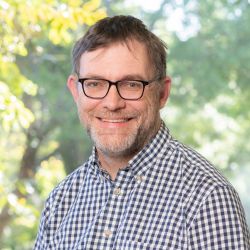
Northumbria University appoints new Deputy Vice-Chancellor and Provost
Northumbria University has announced that Professor Andy Dougill will become its new Deputy…
International
Ideally situated in the 5th best student city in the UK (QS Best Student Cities 2026), Northumbria University is a UK Top 40 University (Complete University Guide 2026) with a diverse community of 34,500 students from over 140 countries.
View our Global FootprintBusiness
Northumbria University is proud to offer a range of Professional, Statutory and Regulatory Body (PSRB) approved & accredited courses and programmes. Explore our list of courses and programmes under our Education and Training page.
More on our Business ServicesResearch
Northumbria is a research-rich, business-focused, professional university with a global reputation for academic quality. We conduct ground-breaking research that is responsive to the science & technology, health & well being, economic and social and arts & cultural needs for the communities
Discover more about our ResearchAlumni
Northumbria University is renowned for the calibre of its business-ready graduates. Our alumni network has over 253,000 graduates based in 178 countries worldwide in a range of sectors, our alumni are making a real impact on the world.
Our AlumniForensic Science is the application of scientific methods and techniques to assist the criminal and civil justice systems. Forensic science is concerned with the detection, identification, and interpretation of physical trace evidence. In practice, forensic science draws upon a wide range of applied sciences including chemistry, biology, physics, engineering, botany, anthropology and archaeology.
The Forensic Science Research Group (FSRG) at Northumbria comprises a highly interdisciplinary group of scientists and ex-practitioners in forensic science, who are interested in advancing knowledge and contributing to the profession and wider society. We are working across disciplinary boundaries in a range of subjects from analytical chemistry, human biology, microbiology, and statistical modelling, to the application of forensic policy and the law. Members of the group have published widely in forensic science and other applied subject areas, and have contributed to casework in the investigation of volume and major crimes, including homicide, serious sexual assault and crimes against humanity.
The core mission of the FSRG is the development of integrated multi-proxy approaches to forensic science, and particularly evidence interpretation based on a robust understanding of the persistence and transfer of trace evidence in the forensic environment. To this end we are researching a number of broad areas of forensic science, but with a distinct multi-disciplinary focus:
Based in the Department of Applied Sciences, collaborating with colleagues from the biosciences, chemistry, law, criminalistics, geography and environmental science, we have a range of research projects spanning the interface between forensic science and other investigative fields such as environmental chemistry, criminal law, criminalistics, archaeology and palaeoanthropology. We also have a vibrant post-graduate and post-doctoral research community within the FSRG.
Several of the FSRG team are also members of the TeLePRT Pedagogical Research Group with particular interest in the use of technology to enhance forensic science training and professional practice for students, forensic practitioners, and law enforcement.
The FSRG is committed to the communication of forensic science to the professional community and public. As part of that goal, we host a regular series of invited guest research seminars related to forensic science and its impact on society.
Dr Aaron Amankwaa: Forensic science policy professional and academic specialising in forensic DNA databases & biometrics, forensic biology and genetics.
Dr Alan Langford: Former forensic toxicologist and expert witness with Lothian and Borders Police (now SPA) with experience in seized drug analysis and ante/postmortem drug interpretation
Dr Ed Schwalbe has research interests in statistics and bioinformatics, including the investigation of patterns of DNA methylation in the identification of body fluids and tissue sources, as well providing statistical support to other members of the group.
Dr Edmond Sanganyado is interested in reconstructing contamination events using chromatographic and spectrometric techniques, with a focus on emerging contaminants in aquatic environments. He also has interests in environmental risk assessment, marine mammalian toxicology, and enantioselective analysis.
Dr Eleanor Graham undertakes research in the application of molecular genetics to human identification and forensic evidence at the activity level, including both low-template DNA analysis and wildlife forensics, and to archaeological specimens via ‘ancient DNA’. Eleanor leads the TeLePRT Pedagogical Research Group and is interested in embedding forensic employability within the academic curriculum.
Dr James Railton: Specialist in materials science, chemistry and chemical analysis with research interests in themes of sustainability, surface chemistry and persistence of trace material.
Dr Julio de Carvalho Ponce: 13 years experience as a Forensic Expert in Brazil, working with homicide cases, forensic toxicology and analysis of seized drugs
Dr Kate Randall: Molecular ecologist with a focus, but not limited to microbial communities
Dr Kelly Sheridan is an expert in forensic textile fibre analysis, having conducted research in fibre transfer and persistence in a number of practical contexts, and in the interpretation of fibre evidence.
Dr Nabanita Basu: Data science and forensic statistics expert
Naomi Richardson: Former forensic scientist specialising in the examination and recovery of biological traces including fibre analysis and the interpretation of biological evidence.
We are active in research in forensic DNA and databases, forensic taphonomy and thanatology, forensic anthropology, trace evidence analysis—transfer and persistence, gunshot residue analysis and firearms identification, forensic drug analysis and toxicology, latent print chemistry and enhancement, blood pattern analysis, and issues in forensic science policy and procedure. We collaborate with other groups in the University:
We also engage with eternal partners and stakeholders in the academic, private and governmental sectors. Our researchers also are engaged with academic quality assurance and subject development through various agencies. Some of our external stakeholders and partners include:
Members of the FSRG actively participate in case consultancy work. Please visit the individual staff pages for further details of expertise.
Members of the FSRG are committed to the communication of scientific research and engagement with the criminal justice system and public. As part of this some of our members have published a number of articles in The Conversation (UK and Africa editions) on their research and its applications:
Our team have also had their research featured in National and International news stories in the media:
Catching lightning in a bottle — how study of a natural phenomenon could aid pathologists in criminal investigations
We have a vibrant postgraduate and postdoctoral community within the FSRG. Our staff also co-supervise researchers at external institutions. Our current PG and PD researchers comprise:
Prospective postgraduate research students are encouraged to enquire with the relevant member of staff. University information on postgraduate research studies can be found here.
For further information on research and consultancy interests, please contact Dr Patrick Randolph-Quinney or individual staff members.
Northumbria University has announced that Professor Andy Dougill will become its new Deputy…
Northumbria University is expanding and enhancing the support it provides to students receiving…
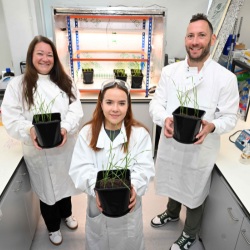
With the global population expected to reach 10 billion by 2050 and crop yields declining annually,…
An Assistant Professor at Northumbria University won the Royal Society of Chemistry’s Award…
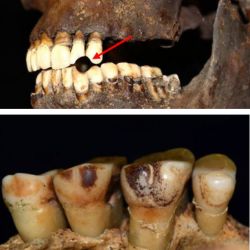
Researchers from Northumbria University have discovered that smokers have tell-tale signs of…
Northumbria University has been named Higher Education Institution of the Year at a prestigious…