New platform maps charity support for the Armed Forces community
Pioneering data platform maps where the Armed Forces community receive support from charities


David gained his undergraduate degree in 2010 at the University of Bath in Sport and Exercise Science. He completed a placement year as part of the degree working at the TeamBath high performance centre as a physiologist. David completed his MSc in Applied Sport and Exercise Physiology at St Marys University in 2012. Following his MSc David began a part-time PhD with the English Institute of Sport (EIS) and Northumbria University investigating the benefits of eccentric cycling for improving sports performance. In conjunction with his PhD David also manages the EIS physiology lab based at Loughborough University.
Eccentric muscle contractions are considered a potent stimulus for adaptation due to their ability to generate much greater levels of tension compared to concentric or isometric contractions. Eccentric (isokinetic) cycling is facilitates high volumes of lower limb eccentric contractions whilst virtually eliminating the need for concentric contractions. Our research has examined the familiarisation process to this novel training method and its efficacy as a tool to monitor changes in lower limb eccentric strength. Furthermore we are investigating the effect of session structure (i.e. intervals or continuous) on the in-session demands and post-session consequences of eccentric cycling. Finally we are also examining the effect of a period of chronic eccentric cycling on sports performance in a group of competitive athletes.
Green, D.J., Thomas, K., Ross, E., Pringle, J. & Howatson, G. Familiarisation to maximal recumbent eccentric cycling. Isokinetics and Exercise Science, vol. Preprint, no. Preprint, pp. 1-8, 2016. DOI: 10.3233/IES-160640.
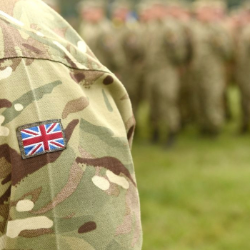
Pioneering data platform maps where the Armed Forces community receive support from charities

A major study co-led by Northumbria University will test whether attachment assessments lead…

New research published today by the AHRC Creative Communities programme provides fresh evidence…

Northumbria University's award-winning Student Law Office is launching SEND Decoded, a series…

The Net Zero Polar Science (NZPS) Doctoral Training Programme (DTP) has welcomed its first…

A new drop-in service is bringing health and wellbeing support for students at both Newcastle…

A new project led by Northumbria University aims to grow optical fibres using proteins, mimicking…

Northumbria University has hosted a major international workshop, bringing together leading…
The Great Hall, Sutherland Building
-

Manchester Marriott Hotel Piccadilly
-

Sutherland Building
Page last reviewed: 3 May 2020
