Training the next generation of space scientists
Northumbria University has hosted a major international workshop, bringing together leading…

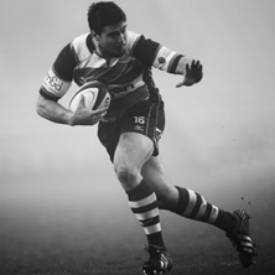
Ralph Appleby is a PhD researcher at Northumbria university investigating athlete burnout and a lead psychology intern with Team Northumbria. Ralph previously completed a masters in sport and exercise psychology and is currently working towards his stage two BPS accreditation. Ralph is a keen sports enthusiast and rugby player having played for Darlington Mowden Park for the last eight years.
The current research contributes to the scientific community by assessing the influence the social environment (i.e., perception of teammates and coach-athlete relationship) has on athlete burnout, and builds on the limited longitudinal research. Although, researchers such as Madigan, Stoeber, and Passfield (2015, 2016) have recently started to adopt longitudinal designs in the study of burnout, the research comprising this PhD program of study differs as it involves the inclusion of physiological measures that expand the examination of the coach-athlete relationship and burnout. Study one examined the influence of training hours and social perceptions on athletes’ burnout in team sport. The analysis revealed that the perception of teammate burnout and training hours influenced an athlete’s own level of burnout. The aim of the second and third study was to further examine the social environment of the athlete by determining the influence of the coach-athlete relationship on athlete exhaustion (Isoard-Gautheur, Trouilloud, Gustafsson, & Guillet-Descas, 2016). Additionally, the second and third study investigated the effect of burnout and the coach-athlete relationship on cognitive and physical performance of athletes.
Appleby, R., Davis, P., Davis, L., & Gustafsson, H. (2015). An Examination of the Influence of Training Hours on Athlete Burnout. The British Psychology Society Division of Sport and Exercise Psychology, Leeds, United Kingdom, 14th-15th December, 2015.
Appleby, R., Davis, L., Davis, P., Gustafsson, H., & Lundkvist, E. (2016). The influence of perceptions of teammates’ burnout on individual athletes’ emotional well being. The British Psychology Society Division of Sport and Exercise Psychology, Cardiff, United Kingdom, 12th-13th December, 2016. .

Northumbria University has hosted a major international workshop, bringing together leading…
.png?modified=20261006102851)
Researchers at Northumbria University and Imperial College London have launched an international…

Graduate entrepreneurs from Northumbria University are celebrating after winning recognition…

Researchers at Northumbria University's Centre for Responsible AI are working with Face Equality…

Northumbria University and Lockheed Martin Space UK have signed a new Master Research Agreement,…

The longest satellite record ever assembled shows that Greenland and Antarctica have lost 11.3…

Dr Juna Sathian, an Associate Professor at Northumbria University, has been elected a Fellow…

Northumbria University has played a key role in shaping a new national plan designed to help…

Europa Hotel
-
The Great Hall, Sutherland Building
-
Manchester Marriott Hotel Piccadilly
-
Page last reviewed: 3 May 2020
