Free sessions to help families navigate the SEND system
Northumbria University's award-winning Student Law Office is launching SEND Decoded, a series…

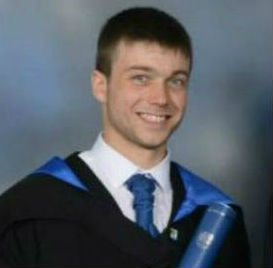
Callum Brownstein is a doctoral research student at Northumbria University, investigating recovery of central nervous system function following intermittent-sprint exercise. He graduated from Heriot-Watt University with first class honours in 2014, before completing his masters by research at the same university in 2015. Callum has held positions as a sport scientist at Heart of Midlothian F.C and Hamilton Academical F.C and worked as head coach of Heriot-Watt University Boxing Club. Callum began his doctorate at Northumbria University in October 2015.
Callum’s PhD project focuses on recovery of central nervous system (CNS) function following intermittent-sprint exercise. Traditionally, the fatigue and subsequent recovery from intermittent-sprint exercise has been studied from a peripheral viewpoint, with a focus on processes occurring at the muscle. Fatigue and delayed recovery of the CNS might also contribute to the prolonged loss of function experienced after intermittent-sprint exercise, but thus far the acute and chronic responses of the CNS to intermittent-sprint exercise have not been well-studied. Using a holistic approach, Callum’s research will apply novel methods of neurostimulation to assess fatigue and the time-scale of recovery from central and peripheral origins. Concurrent to this a range of perceptual and physical performance indicators of fatigue will be assessed, with the aim to validate their use as indicators of neuromuscular fatigue. The resulting data will provide new information on the time course of recovery after intermittent-sprint exercise that could be used to determine readiness to train and compete and the optimal recovery time between training and competition bouts. Furthermore, the work will provide the foundation of a battery of tools to assess recovery and inform further work on suitable interventions to attenuate the negative effects of fatigue and accelerate recovery.
Gibson N, Brownstein CG, Ball D & Twist C. The acute physiological, perceptual and performance responses associated with self-selected versus standardized recovery periods during a repeated sprint protocol in elite youth football players: A preliminary study. Pediatr Exerc Sci, [EPub ahead of print].

Northumbria University's award-winning Student Law Office is launching SEND Decoded, a series…

The Net Zero Polar Science (NZPS) Doctoral Training Programme (DTP) has welcomed its first…

A new drop-in service is bringing health and wellbeing support for students at both Newcastle…

A new project led by Northumbria University aims to grow optical fibres using proteins, mimicking…

Northumbria University has hosted a major international workshop, bringing together leading…
.png?modified=20261006102851)
Researchers at Northumbria University and Imperial College London have launched an international…

Graduate entrepreneurs from Northumbria University are celebrating after winning recognition…

Researchers at Northumbria University's Centre for Responsible AI are working with Face Equality…
Europa Hotel
-
The Great Hall, Sutherland Building
-
Manchester Marriott Hotel Piccadilly
-
Page last reviewed: 3 May 2020
