New platform maps charity support for the Armed Forces community
Pioneering data platform maps where the Armed Forces community receive support from charities


Humans produce an adaptive response to a single bout of maximal eccentric exercise which reduces muscle damage markers in an identical bout performed a second time, known as the repeated bout effect (RBE). Several mechanisms including neural adaptations, changes in the inflammatory response, and mechanical adaptations are thought to be driving the RBE, however this is not fully understood. This research will predominantly focus on mechanical adaptations within the muscle-tendon unit (MTU) and the differences in response between males and females. It has been suggested that increased tendon compliance, following a bout of damaging eccentric exercise, might result in reduced lengthening of the muscle fascicle and lead to fewer indices of muscle damage. Using ultrasonography, the behaviour of the MTU and markers of muscle damage will be assessed before, during and after a bout of damaging maximal eccentric exercise of the knee extensors. An identical bout of exercise, and all assessment methods, will be repeated after 4 weeks and comparisons of MTU properties and muscle damage markers will be compared. The results of this first study will then be applied to an exercise method consisting of whole body movement, making the findings more applicable to a sporting environment.
Humans produce an adaptive response to a single bout of maximal eccentric exercise which reduces muscle damage markers in an identical bout performed a second time, known as the repeated bout effect (RBE). Several mechanisms including neural adaptations, changes in the inflammatory response, and mechanical adaptations are thought to be driving the RBE, however this is not fully understood. This research will predominantly focus on mechanical adaptations within the muscle-tendon unit (MTU) and the differences in response between males and females. It has been suggested that increased tendon compliance, following a bout of damaging eccentric exercise, might result in reduced lengthening of the muscle fascicle and lead to fewer indices of muscle damage. Using ultrasonography, the behaviour of the MTU and markers of muscle damage will be assessed before, during and after a bout of damaging maximal eccentric exercise of the knee extensors. An identical bout of exercise, and all assessment methods, will be repeated after 4 weeks and comparisons of MTU properties and muscle damage markers will be compared. The results of this first study will then be applied to an exercise method consisting of whole body movement, making the findings more applicable to a sporting environment.
Marshall, S. J., Livingstone, K. M., Celis-Morales, C., Forster, H., Fallaize, R., O'Donovan, C. B., Woolhead, C., Marsaux, C. F. M., Macready, A. L., Navas-Carretero, S., San-Cristobal, R., Kolossa, S., Tsirigoti, L., Lambrinou, C. P., Moschonis, G., Godlewska, M., Surwillo, A., Drevon, C. A., Manios, Y., Traczyk, I., Martinez, J. A., Saris, W. H., Daniel, H., Gibney, E. R., Brennan, L., Walsh, M. C., Lovegrove, J. A., Gibney, M., Mathers, J. C. and Food4Me, S. (2016). Reproducibility of the Online Food4Me Food-Frequency Questionnaire for Estimating Dietary Intakes across Europe, Journal of Nutrition, 146(5), 1068-1075.
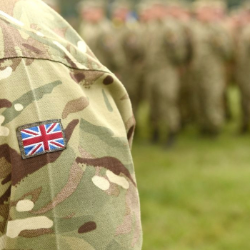
Pioneering data platform maps where the Armed Forces community receive support from charities

A major study co-led by Northumbria University will test whether attachment assessments lead…

New research published today by the AHRC Creative Communities programme provides fresh evidence…

Northumbria University's award-winning Student Law Office is launching SEND Decoded, a series…

The Net Zero Polar Science (NZPS) Doctoral Training Programme (DTP) has welcomed its first…

A new drop-in service is bringing health and wellbeing support for students at both Newcastle…

A new project led by Northumbria University aims to grow optical fibres using proteins, mimicking…

Northumbria University has hosted a major international workshop, bringing together leading…

Europa Hotel
-
The Great Hall, Sutherland Building
-
Manchester Marriott Hotel Piccadilly
-
Page last reviewed: 3 May 2020
