Criminologist wins acclaimed Philip Leverhulme Prize to pioneer a new criminology of the offshore world
A Northumbria University criminologist has been awarded a Philip Leverhulme Prize, one of the…

We are a successful group pursuing high-international-priority research across the broad remit of Solar and Space Physics. The group demonstrates international leadership across theory, numerical modelling, observations of solar and space plasma, data intensive science, and a growing reputation for space-related hardware.
Our Solar and Space Physics research has been supported with core funding from STFC and NERC as well as funding from EU Horizon 2020, European Space Agency (ESA), UK Space Agency (UKSA), the US Air Force, the National Solar Observatory (USA), the Leverhulme Trust, and the Royal Astronomical Society. The Group leads an STFC Centre for Doctoral Training in Data Intensive Science. Members of the group, including Prof Jonathan Rae, Prof Clare Watt, Dr Shaun Bloomfield and Dr Andy Smith also contribute to the ongoing UKRI SWIMMR (Space Weather Instrumentation, Measurement, Modelling and Risk) national space weather programme in support of the UK Met Office. The group includes 1 Future Leader Fellow (Dr Richard Morton), 2 Royal Society University Research Fellows (Dr Luca Franci, Dr Julia Stawarz), 1 NERC Independent Research Fellow (Dr Andy Smith), 1 STFC James Webb Fellow (Dr Henrik Melin) and 2 STFC Ernest Rutherford Fellows (Dr John Coxon, Dr Stephanie Yardley).
Group members sit on various national and international panels including the STFC Education, Training and Careers Committee (Prof James McLaughlin), STFC Solar System Advisory Panel (Dr Patrick Antolin and Dr Charlotte Goetz), STFC Project Peer Review Panel (Prof Robert Wicks), UKSA’s Space Programme Advisory Committee (Prof Clare Watt) and ESA’s Space Science Advisory Committee (Prof Jonathan Rae).
Contact: Prof. James McLaughlin
This research group forms part of the Department of Mathematics, Physics and Electrical Engineering. and part of the wider 'Space' research theme across the University, i.e. www.northumbria.ac.uk/space
We lead an STFC Centre for Doctoral Training in Data Intensive Science, called NUdata, which is a collaboration between Northumbria and Newcastle Universities, STFC, and a portfolio of over 40 industrial partners, including SMEs, large/multinational companies, Government and not-for profit organisations, and international humanitarian organisations. Together, the two Universities cover a broad range of STFC science, from planets to cosmology. The consortium will train a new generation of PhD students with the skills required to address the data challenges presented by the STFC core-science programme, as well as applying those skills to different sectors of the broader economy. This will be done in an environment that is inclusive and values contributions to Equality, Diversity and Inclusion at all levels.
You can find out details of the Centre for Doctoral Training at https://research.northumbria.ac.uk/nudata/ including details of our 40+ industry partners.
The Department of Mathematics, Physics and Electrical Engineering has recently been successful with significant funding for space technology research from the UK Space Agency, the Science and Technology Facilities Council, Lockheed Martin, and the Office for Students. Therefore, we are now making a significant strategic investment to hire staff into key areas to enhance and expand our expertise in space-related technology. This strategic investment provides the opportunity for multiple appointments across multiple academic grades, including the potential to establish a small research group.
We are about to finish building and start commissioning the new Northumbria Space Technology Laboratory, which includes all of the state of the art facilities needed for environmental testing of small payloads for space as well as a dark room for class-4 lasers and optical system testing. We have a vibration shaker, an X-ray dose chamber and (arriving in January) a thermal vacuum chamber, all suitable for launch and low Earth orbit testing. We are seeking staff to use this facility to bring space instrumentation development and technology innovation that links to our existing areas of research excellence in the Faculty. That means: aurora, cameras, climate monitoring, comets, the cryosphere, geography, hyperspectral imagery, LIDAR, machine learning and AI, optical communication, outer planets, photovoltaics, sensors (IR, UV, visible) solar physics, space plasma, space weather, spectroscopy, telescopes.


See www.northumbria.ac.uk/NESST for further details.
Examples of recent successes:
The group’s recent research achievements include the discovery of coronal reconnection nanojets (Antolin et al., 2021, Nature Astronomy, 5, 54), revealing the source of Jupiter’s x-ray auroral flares (Yao et al., 2021, Science Advances, 7, 28), creating global maps of the solar magnetic field (Yang et al., 2020, Science, 368, 694), and uncovering a basal contribution from p-modes to the Alfvénic wave flux in the Sun’s atmosphere (Morton, Weberg & McLaughlin, 2019, Nature Astronomy, 3, 223).
To view research papers emanating from this group, please click here to view Northumbria Research Link, our open access repository of research output from Northumbria University.
This group is a part of the University’s multi-disciplinary research into the theme of Space.
A Northumbria University criminologist has been awarded a Philip Leverhulme Prize, one of the…
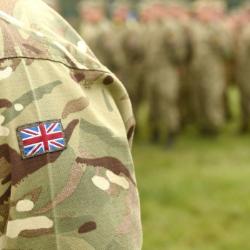
Pioneering data platform maps where the Armed Forces community receive support from charities

A major study co-led by Northumbria University will test whether attachment assessments lead…

New research published today by the AHRC Creative Communities programme provides fresh evidence…

Northumbria University's award-winning Student Law Office is launching SEND Decoded, a series…

The Net Zero Polar Science (NZPS) Doctoral Training Programme (DTP) has welcomed its first…

Manchester Marriott Hotel Piccadilly
-

Sutherland Building

Northumbria University
-
